
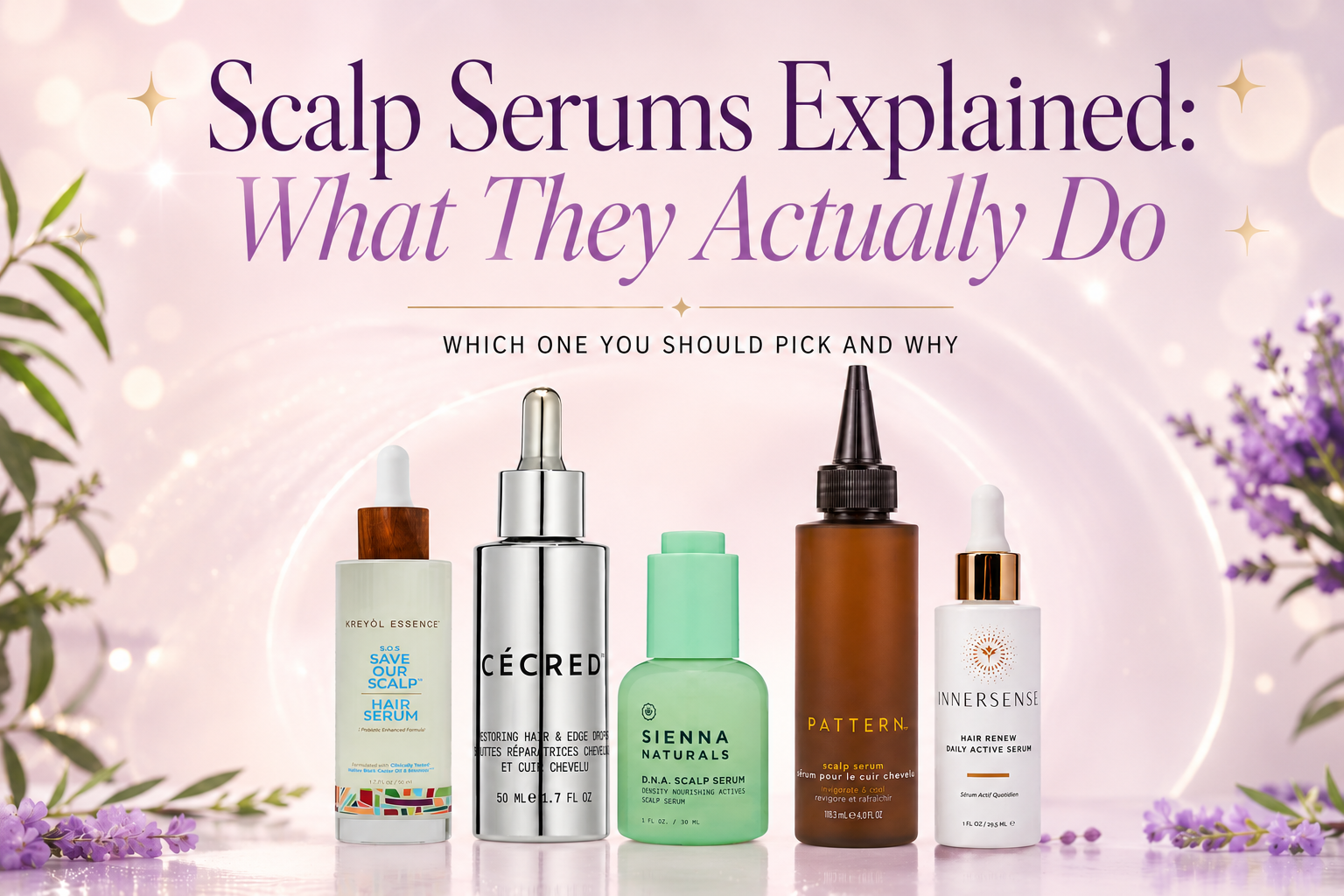
Scalp Serums Explained: What They Actually Do
Scalp care has its own growing shelf now. Where we once saw mostly oils and shampoos, we now see dropper bottles promising hydration, density, a calmer scalp, or even “hair longevity.” It is exciting to have more choices, especially for those of us trying to care for our scalps between wash days or while wearing protective styles. It also makes the word serum a little confusing.
Silicones Aren’t the Enemy! Let’s Talk About What They Actually Do.
Silicone-free.
You have probably seen those words printed across shampoos, conditioners, leave-ins, and styling products. Somewhere along the way, “silicone-free” started sounding like “better for your hair.”
But is it?
Not necessarily.
Silicones have been used in hair products for years because they can do some pretty useful things. They can reduce friction, improve slip, make detangling easier, add shine, smooth the hair, and help protect it during styling. Different silicones also behave differently on the hair.
So before we put silicones on another hair care “NO” list, let's talk about what they actually are and why they might be in your products.

Forget Curl Type. Let’s Talk Porosity.
You probably know whether your hair is 3C, 4A, 4B, or somewhere in between. But do you know how your hair handles water?
Curl type describes the shape of your hair and the twists, curls, or coils it makes as it grows. Porosity tells us something different. It helps us understand how your hair interacts with water.
That can tell us a lot about hair health, product choices, product layering, and even how we style our hair.
Your curl type tells us what your hair looks like. Porosity can tell us more about how your hair behaves.
And when you are trying to build a hair routine that actually works, that information matters.

Glycerin: It’s in Everything… So What Is It Actually Doing to Your Hair?
Glycerin is in almost every moisturizing hair product, but most people don’t actually understand how it works. This breakdown explains what it is, how it’s made, and how to use it based on your environment.

Your Shower Water Has More to do with Your Hair Than You Think (Hard Water Guide)
If your hair feels dry, dull, or impossible to moisturize no matter what you try, hard water might be the real problem. In this post, we break down what hard water actually does to textured hair and how to protect your routine from mineral buildup.

Starting With The Facts: 10 Textured-Hair Myths We’re Retiring Today
Before we dive into all things Crowned, let’s start with the basics: the facts. These ten textured-hair myths have held us back for too long—let’s debunk them together.